
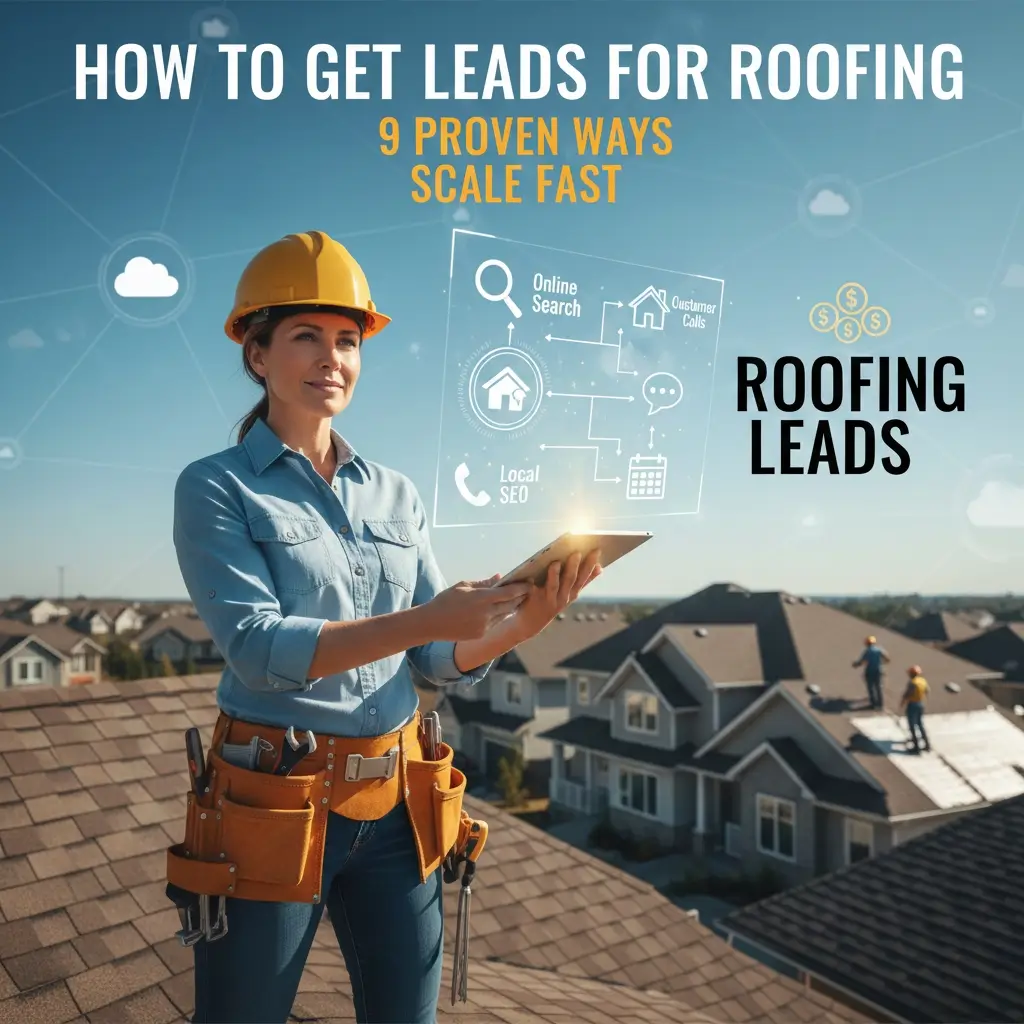
Door knocking feels dated. Online ads drain budgets fast. Meanwhile, homeowners still need new shingles.
So, how to get leads for roofing before competitors swoop in? I’ve tested tools, scripts, and surprise freebies that sparked call floods.
Stick with me for the highest-yield tactics and the ones to skip. In minutes you’ll map a repeatable system, not a one-time stunt.
If you run a roofing business, leads aren’t just numbers on a spreadsheet—they’re the lifeblood of everything you do. No leads means no estimates. No estimates means no jobs. And no jobs? Well, that’s every contractor’s nightmare. Roofing is a competitive, local-first business, and mastering how to get leads for roofing is the only way to stay ahead. Homeowners don’t browse endlessly; they search when there’s an urgent problem—leaks, storm damage, missing shingles—and they want help now. That urgency is exactly why roofing leads matter more than almost any other type of home service lead.
The real challenge isn’t just getting traffic; it’s getting the right traffic. You don’t want clicks from people three states away or homeowners “just researching.” You want motivated, local homeowners who are ready to call, book, or request a quote. When you have a solid plan for how to get leads for roofing, you shorten your sales cycle, reduce wasted ad spend, and keep your crews busy without scrambling at the last minute. Think of leads like rainwater—if your gutters are clean and positioned correctly, every drop flows exactly where you want it to go. If not, you’re left with a mess and missed opportunities.
Another reason roofing leads matter is predictability. When your lead flow is steady, you can plan staffing, materials, and growth. Instead of relying on word of mouth alone or waiting for storms to roll in, you create a system that works year-round. This article breaks down nine proven ways on how to get leads for roofing consistently, even in competitive markets. These aren’t theory-heavy marketing ideas—they’re practical strategies contractors use every day to keep their phones ringing. Let’s dig in.
1: High-Converting Site
Your website is your digital storefront, and first impressions happen fast—often in less than five seconds. If a homeowner lands on your site and can’t immediately see how to contact you, you’ve already lost a lead. A high-converting roofing website isn’t about fancy animations or clever slogans. It’s about clarity, speed, and trust. When someone visits your site, they should instantly know three things: what you do, where you work, and how to contact you.
One of the biggest mistakes roofers make is hiding their phone number or call-to-action. Your site should feature clear, bold “Call Now” buttons at the top of every page, especially on mobile. Remember, most roofing searches happen on phones. If a homeowner has to pinch, zoom, or scroll endlessly to find your number, they’ll bounce and call the next contractor.
Speed matters just as much. A site that takes more than three seconds to load hemorrhages leads. Compress images, use reliable hosting, and avoid unnecessary plugins. Fast sites don’t just convert better—they also rank higher on Google. Trust signals are the final piece of the puzzle. Display customer reviews, star ratings, certifications, and badges prominently. These act like digital handshakes, reassuring visitors they’re dealing with a legitimate professional, not a fly-by-night operation. When all these elements work together, your website becomes a lead-generating machine instead of a static brochure.
2: Local SEO Basics
Local SEO is one of the most powerful—and cost-effective—ways to generate roofing leads over the long term. When homeowners search phrases like “roof repair near me” or “roofing contractor in [city],” Google prioritizes local businesses that are relevant, trusted, and optimized. If your company isn’t showing up on the first page, you’re invisible to the majority of potential customers.
The foundation of local SEO starts with precise roofing keywords. Instead of targeting broad terms like “roofing services,” focus on specific phrases homeowners actually use, such as “emergency roof repair,” “shingle replacement,” or “storm damage roofing.” Pair these keywords with location modifiers to attract local intent traffic. City-based pages are especially effective. Create dedicated pages for each service area you cover, with unique content tailored to that city. Avoid copy-pasting the same text—Google notices, and so do users.
Adding a map and local schema markup further strengthens your SEO presence. Embedded maps help users visualize your service area, while schema gives search engines structured data about your business. This increases your chances of appearing in rich results and local packs. Local SEO isn’t an overnight win, but it compounds over time. Once established, it delivers consistent, high-intent leads without paying for every click.
3: Google Profile Boost
Your Google Business Profile (formerly Google My Business) is often the first thing homeowners see when they search for a roofer. Before they even visit your website, they’ll scan your photos, reviews, ratings, and business details. That makes your profile a powerful lead-generation asset—if you optimize it correctly.
Start by claiming and verifying your page. This step sounds basic, but many contractors skip it or leave profiles half-finished. Fill out every section: services, service areas, business description, and hours. Accuracy matters. An incomplete or outdated profile sends trust signals in the wrong direction. Once verified, make it a habit to post weekly updates. These can be job photos, short tips, promotions, or seasonal reminders. Consistent activity tells Google—and potential customers—that your business is active and reliable.
Reviews are the real secret weapon. Star ratings directly influence click-through rates and calls. Don’t be shy about asking satisfied customers for reviews. Make it easy by sending a direct link via text or email. Respond to every review, good or bad, with professionalism. This shows future customers you care about feedback and service. A well-managed Google Profile can generate calls daily without spending a dollar on ads.
4: Targeted PPC Ads
Pay-per-click advertising is one of the fastest ways to generate roofing leads, especially when you need work now. The key word here is targeted. Throwing money at broad keywords or large service areas burns budgets quickly. Smart PPC focuses on precision—reaching the right homeowners at the right time.
Zip-code targeting is a game-changer. Instead of advertising across an entire metro area, narrow your focus to the neighborhoods you actually want to serve. This reduces wasted clicks and improves lead quality. Offer-driven copy is another critical factor. Homeowners respond to clear, compelling offers like “Free Roof Inspection,” “Same-Day Estimates,” or “Storm Damage Specialists.” Your ad copy should speak directly to their pain points, not your company history.
Tracking is non-negotiable. Set up call tracking and conversion tracking so you know exactly which ads generate phone calls and form submissions. Without data, you’re flying blind. When done correctly, PPC becomes a scalable lead source. You can dial spending up during slow seasons and pull back when your schedule is full. It’s like a faucet—you control the flow.
5: Blog & Guides
Blogging might not seem like an immediate lead generator, but it plays a crucial supporting role in your marketing ecosystem. Educational content builds trust, improves SEO, and attracts homeowners earlier in their decision-making process. When done right, blogs quietly warm up leads before they ever pick up the phone.
Roof care tips posts are a great starting point. Articles about maintenance, warning signs of damage, or lifespan of roofing materials position you as an expert, not just a salesperson. Storm damage alerts are especially effective in regions prone to hail or heavy winds. Timely posts explaining what to look for after a storm can drive spikes in traffic and calls. Another high-performing topic is pricing content, such as a “cost to roof” article. Homeowners are already searching for this information, and transparency builds trust.
Each blog post should include clear calls-to-action, guiding readers toward inspections or estimates. Over time, your blog becomes a library of helpful resources that attract organic traffic and convert it into leads.
6: Social Media Leads
Social media isn’t just for brand awareness—it can be a direct lead source when used strategically. Roofing is visual, which makes platforms like Facebook and Instagram ideal. Before-and-after photos showcase your workmanship better than any sales pitch. They tell a story of transformation and reliability.
Local Facebook groups are goldmines. Homeowners often ask for contractor recommendations, especially after storms. Being active and helpful—not spammy—positions you as the go-to roofer. Live roof Q&A shows are another underused tactic. Going live to answer common questions builds trust and familiarity. People are more likely to call a contractor they’ve already “met” online.
Consistency is key. Social media rewards regular posting and engagement. Over time, your presence builds recognition, and recognition turns into leads.
7: Referral Rewards
Referrals are some of the highest-quality roofing leads you’ll ever get. They come pre-loaded with trust, which shortens the sales process dramatically. The trick is not leaving referrals to chance. A simple referral rewards program gives happy customers a reason to spread the word.
Cash or gift cards work best—keep it straightforward. Create a shareable link system so customers can easily refer friends and neighbors. Speed matters here. Thank referrers fast, ideally within days, not weeks. Quick rewards reinforce positive behavior and encourage more referrals.
A well-run referral program turns your customer base into a sales force that works around the clock.
8: Trade Partnerships
Strategic partnerships can unlock steady streams of roofing leads without competing in crowded ad spaces. Realtors, insurance agents, and property managers all interact with homeowners who need roofing services. Building relationships with these professionals creates win-win scenarios.
Offer co-branded flyers, shared educational content, or mutual referrals. Property managers, in particular, value reliable contractors who communicate well and handle issues quickly. These partnerships take time to build but pay off with consistent, high-quality leads that often bypass price shopping.
9: Email Lead Drip
Email marketing keeps your business top of mind long after the first contact. A lead drip campaign nurtures prospects who aren’t ready to book immediately. Start with a free roof check email, followed by seasonal tune-up reminders and helpful tips.
Automation does the heavy lifting. Set up follow-ups that trigger based on actions or time intervals. Track open rates, clicks, and responses to refine your messaging. Email might not feel exciting, but it’s one of the most cost-effective ways to convert warm leads into booked jobs.
look to this article about how to generate commercial roofing leads
Track, Test, Improve
All these strategies work best when measured. Use a CRM tool to track leads, sources, and outcomes. Measure cost per lead and cost per job. Review results monthly and adjust tactics accordingly. Marketing isn’t static—it’s an ongoing process of improvement.
Wrap Up & Next Steps
Generating roofing leads doesn’t require magic, it requires systems. From high-converting websites and local SEO to referrals and partnerships, these nine strategies create a balanced, sustainable lead pipeline. Start by choosing two or three methods and commit to them for 30 days. Track results, refine your approach, and expand from there. Consistency beats complexity every time.